Our Intersectional
Monitoring Process &
“From Data to Action”
Webinar Series
The Intersectional Monitoring Exploration Process

Why Intersectional Monitoring?
Since 2019, the FAIR SHARE Monitor has been tracking binary gender distribution in the civil society sector. Recognising that this approach to monitoring falls short in capturing both the multiple forms of marginalisation and the systemic structures that sustain them, FAIR SHARE partnered with civil society experts to explore intersectional approaches to monitoring. In late 2022, we launched this process with the support of the Federal Ministry for Family Affairs, Senior Citizens, Women and Youth, culminating in a set of recommendations.
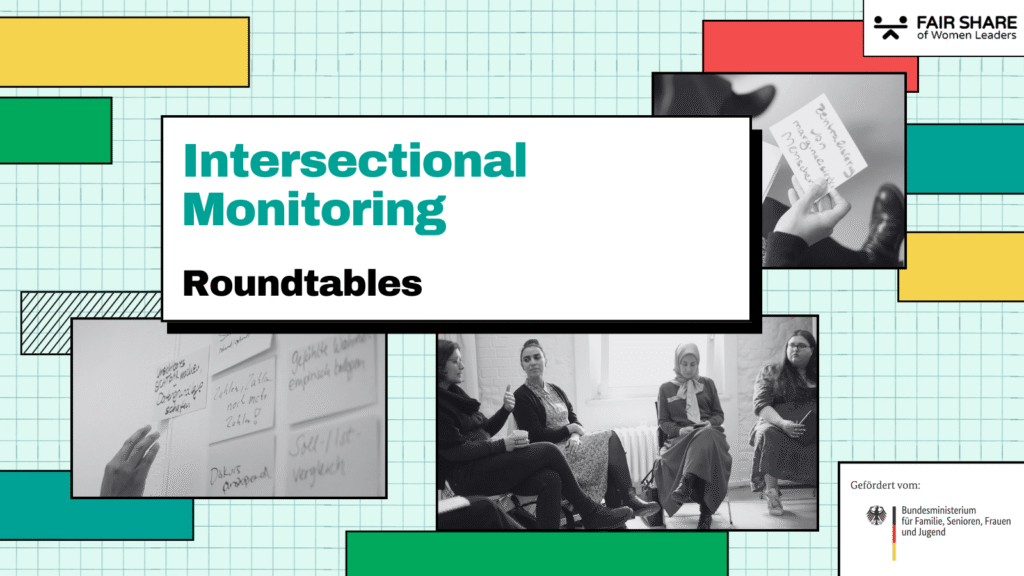
The process was shaped by a dedicated working group that met regularly to guide the project’s implementation. The exploration centred on three key elements:
- Protecting and ensuring the well-being of those negatively affected by discrimination
- Structural change
- Being mindful of the difference between desired and undesired visibility


Recommendations from the exploration process
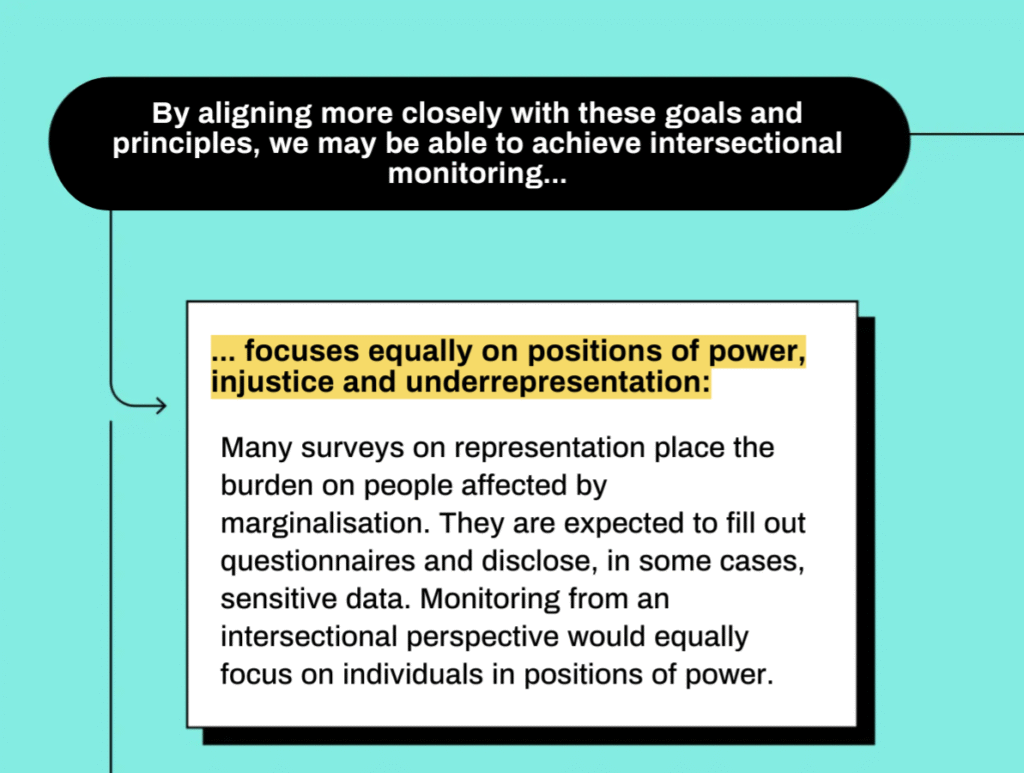
During the exploration phase, seven guiding principles were defined as the foundation for more intersectional monitoring. A comparison with conventional monitoring approaches highlighted how intersectional monitoring goes beyond standard data collection.
Additional considerations were outlined to identify what is needed for transformative shift in monitoring:
- Comprehensive overview of intersectional monitoring approaches and an assessment of existing monitoring strategies
- Consultation with a panel of experts and professional (psychological) process facilitation
- Creation of online and offline learning opportunities to ensure access to knowledge.
The results of this exploration process were recorded in a recommendation paper.
Webinar Series: From Data to Action – How intersectional representation data can help us challenge power structures and strengthen diversity
This webinar series was recorded in German.
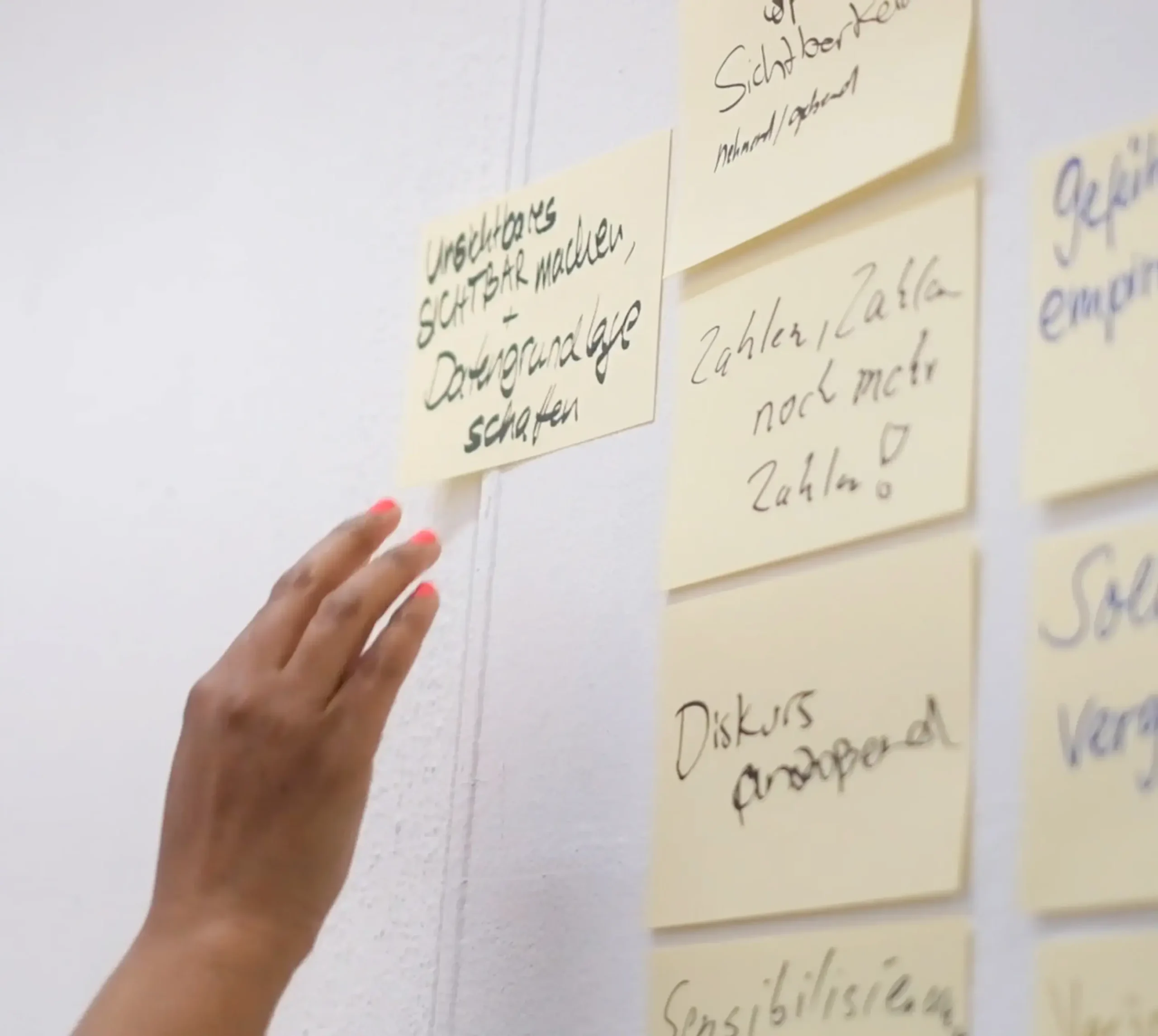
Considering overlapping forms of discrimination
Most civil society organisations are still a long way from achieving fair representation of their workforce in leadership positions. Thankfully, many are already actively addressing the issue and collecting internal data on diversity and representation. However, monitoring must be designed and implemented through an intersectional lens to enable the analysis and exposure of power structures, differentiate between desired and undesired visibility, and capture marginalised perspectives in ways that lead to concrete measures and organisational change. With intersectional data, we can identify and leverage opportunities for change and lay the foundation for lasting structural transformation.
From Data to Action – Webinar series on intersectional monitoring
Building on our learnings from the exploration phase, our three-part webinar series ‘From Data to Action – How intersectional representation data can help us challenge power structures and strengthen diversity’ bridged the gap between theory and practice. Together with a broad network of stakeholders, we critically examined existing monitoring approaches and experimented with intersectional monitoring methods.
All three webinars were moderated by Alexandra Antwi-Boasiako and supported by an awareness team from DisCheck. The webinar series was funded by the Federal Ministry for Family Affairs, Senior Citizens, Women and Youth.

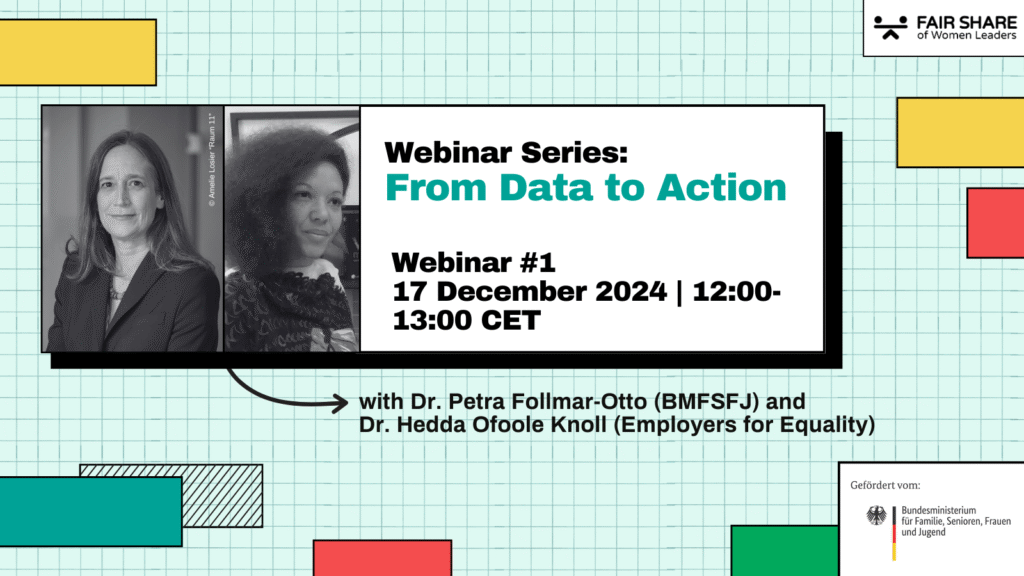
The webinar series kicked off with an exciting launch focused primarily on the opportunities of intersectional monitoring. The panel discussion aimed to broaden perspectives and spark deeper reflection. In the first session, Dr. Petra Follmar-Otto (Head of the Department for Gender Equality, German Federal Ministry for Family Affairs, Senior Citizens, Women and Youth) and Dr. Hedda Ofoole Knoll (General Director, Employers for Equality) explored the necessity and potential of intersectional monitoring as a mean to effectively dismantle traditional structures and patterns within civil society.


To use intersectionality as an analytical tool in monitoring, the entire monitoring process – from developing data collection methods to gathering and analysing data – must be designed and implemented through an intersectional lens.
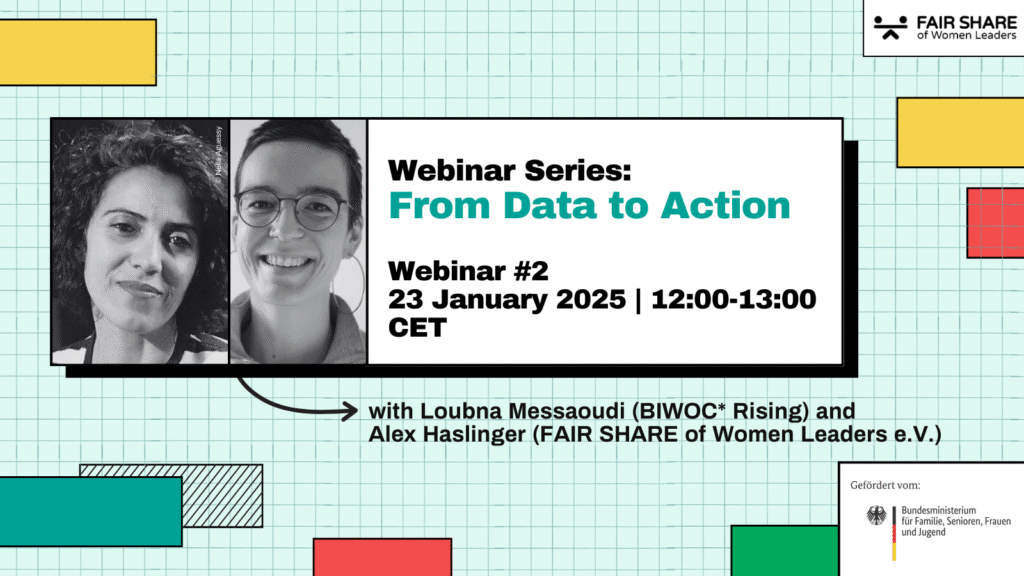
The findings and experiences from the exploration process were presented and discussed in the second part of the ‘From Data to Action’ webinar series on 23 January 2025 from 12:00 to 13:00 CET. Loubna Messaoudi (BIWOC* Rising) and Alex Haslinger (FAIR SHARE of Women Leaders) discussed the core principles and approaches of a more intersectional monitoring process and answered questions from the audience.


Intersectional Monitoring Pilot Findings
Assessing barriers to inclusion in the social impact sector
Based on insights from the exploration process, we developed an intersectional monitoring pilot tool to assess barriers to inclusion within the social impact. Specifically, the pilot aimed at better understanding how social impact organisations engage with the structural factors that shape intersectional inclusion, or the lack thereof.
Instead of focusing solely on who is included or excluded, we explored the systems and practices behind these outcomes – looking at how inclusion is measured and sustained, and how exclusion is remedied. Through this approach, we aimed at uncovering how monitoring structural barriers can provide a more comprehensive picture of what the sector needs to advance intersectional inclusion and foster cross-sectoral engagement on this topic.
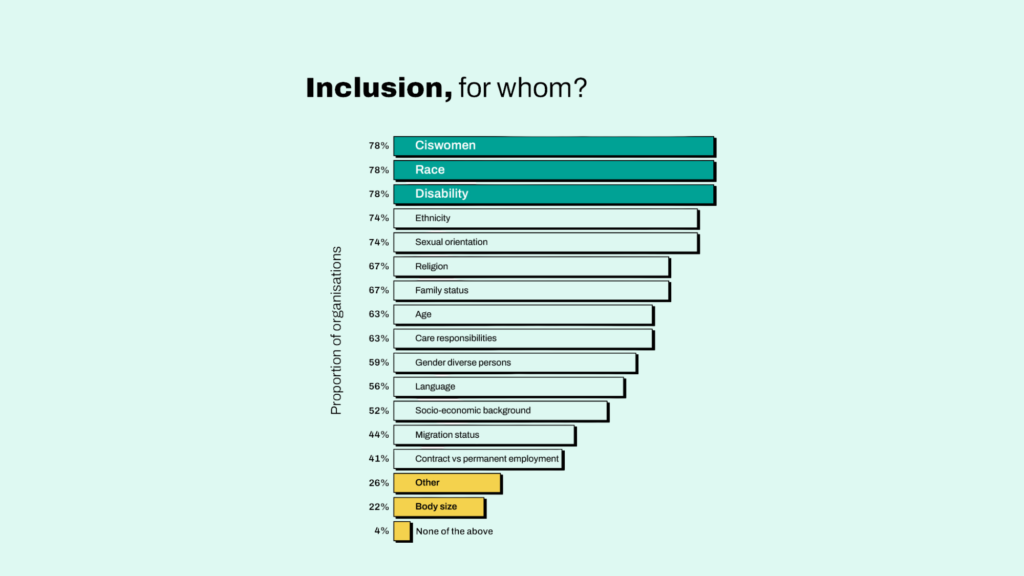
The pilot saw the participation of 27 social impact organisations across different countries and generated valuable insights into how organisations approach intersectional inclusion. It highlighted existing systems to support inclusive environments and individuals with lived experience of marginalisation, while also revealing important gaps related to monitoring practices, internal systems, accountability and privilege.
Explore the findings
Missed the Convening? Watch the recording